
The Lineage of Gelug
Step into the "School of the Virtuous Method" with this guide to the Gelug tradition of Tibetan Buddhism. Founded by the brilliant scholar and monastic reformer Je Tsongkhapa, the Gelug lineage emphasizes strict ethical discipline, comprehensive academic study, and sharp analytical debate. Explore how this renowned tradition distinguished by its iconic yellow hats and home to the lineage of the Dalai Lamas presents the Lamrim ("Graduated Path"), a systematic, step-by-step psychological framework designed to guide every seeker toward ultimate wisdom and universal compassion.
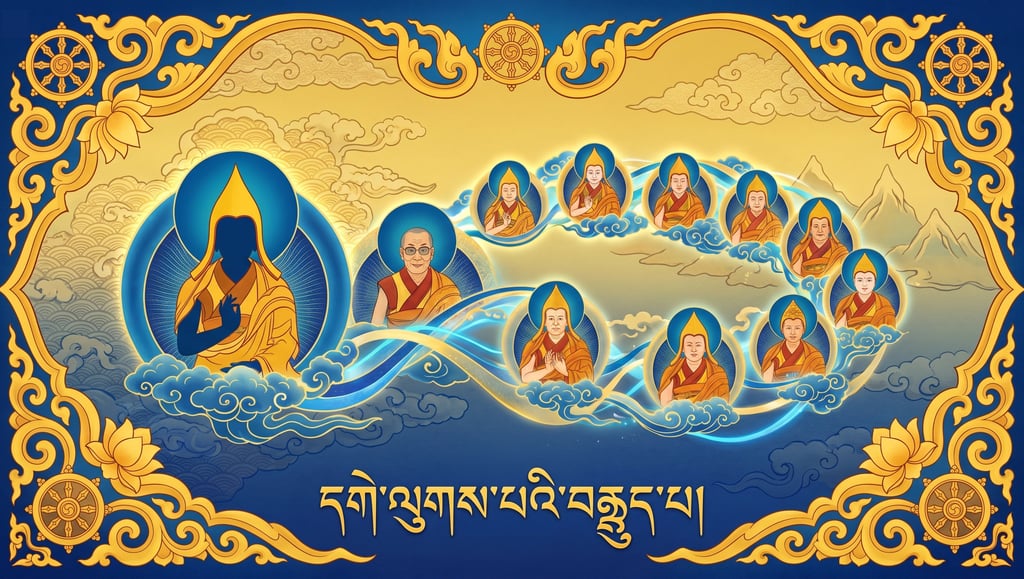
This formidable tradition is the Gelug lineage, a name that translates beautifully to the system of the Virtuous Method.
Distinctly identified around the world by the iconic, high-peaked yellow hats worn by its masters during formal rituals, the Gelug school was established in the early fifteenth century not as a radical departure from the past, but as a deliberate, meticulous spiritual renaissance. While older lineages often celebrated the spontaneous, unconventional realization of solitary mountain yogis or preserved family-inherited esoteric systems, the Gelug tradition carved out its monumental legacy through an absolute dedication to strict monastic vows, exhaustive academic scholarship, and the sharp, rigorous art of philosophical debate. By beautifully organizing the vast, chaotic sea of Buddhist teachings into a systematic, step-by-step psychological framework, the Gelug school grew at an astonishing rate, transforming the Tibetan plateau into a land of massive monastic universities and eventually giving rise to the lineage of the Dalai Lamas.
The architectural mastermind behind this spiritual and cultural revolution was Je Tsongkhapa, a towering intellectual giant, prolific writer, and deeply realized yogi who is universally revered by Gelug practitioners as a second Buddha. Born in the Amdo region of northeastern Tibet, Tsongkhapa spent his youth traveling from monastery to monastery, tirelessly studying under the greatest living masters of all the existing Buddhist schools. As he mastered the philosophies of his era, Tsongkhapa grew increasingly concerned with what he perceived as a widespread decline in monastic discipline and an alarming tendency among some practitioners to engage in advanced, esoteric tantric rituals without a solid foundational understanding of ethics and logic. In response, he initiated a massive reform movement, founding Ganden Monastery in 1409 near Lhasa. Tsongkhapa passionately argued that genuine mystical realization is impossible without a flawless foundation of ethical purity and intellectual clarity. He re-emphasized the strict celibacy and lifestyle guidelines of the classical monastic code, asserting that a student must first exhaustively analyze and intellectually comprehend the true nature of reality, specifically the profound philosophy of emptiness, before attempting the advanced energetic practices of tantra, lest they fall into dangerous delusion.
Following Tsongkhapa’s passing, his brilliant disciples carried his vision forward with an extraordinary organizational energy, constructing a network of monastic universities that would become the largest institutions of their kind in human history. Monasteries like Drepung, Sera, and Tashilhunpo grew to house tens of thousands of monks, operating as massive intellectual factories dedicated to preserving the Dharma through an unparalleled standard of education. At the absolute core of this academic engine is the unique Gelug tradition of dialectic debate. Far from being a dry, academic exercise, Gelug debate is a highly dynamic, physically energetic, and psychologically intense practice. In the courtyard of a Gelug monastery, one monk sits on the ground representing the defender of a philosophical thesis, while another stands over him as the challenger, physically throwing his body forward, stamping his feet, and clapping his hands loudly with every theological question. This rigorous dialectic sparring is designed to systematically expose any hidden assumptions, logical fallacies, or intellectual laziness in the student's mind, sharpening the intellect into a precise, flawless instrument capable of cutting through the deepest roots of ego and ignorance.
As the centuries progressed, the immense spiritual authority and organizational brilliance of the Gelug school naturally translated into temporal and political leadership over a unified Tibet, anchored by the historic emergence of the Dalai Lama lineage. The title Dalai Lama, meaning Ocean of Wisdom, was first bestowed by the Mongol ruler Altan Khan upon Sonam Gyatso, the third incarnation in the lineage, who retroactively applied the title to his two previous incarnations, including Tsongkhapa’s direct disciple, Gendun Drup. The apex of Gelug political and spiritual influence arrived with the monumental reign of the Fifth Dalai Lama, known historically as the Great Fifth. In the seventeenth century, with the military backing of Mongol allies, the Great Fifth unified the warring factions of Tibet and established the central government, constructing the breathtaking Potala Palace in Lhasa as the seat of both temporal and spiritual power. From this pivot point in history, the succession of Dalai Lamas served as the formal heads of the Tibetan state, projecting the Gelug ideals of compassion, ethical responsibility, and rigorous education onto the global stage, a legacy that continues to resonate powerfully in the modern world through the tireless global presence of the fourteenth Dalai Lama.
Philosophically and meditatively, the entire Gelug curriculum is elegantly anchored by a comprehensive system of literature known as the Lamrim, or the Graduated Path to Enlightenment. Heavily inspired by the eleven-century Indian master Atisha, Tsongkhapa authored the definitive Lamrim texts, creating an immaculate, step-by-step psychological roadmap that guides a practitioner systematically from their very first day on the spiritual path all the way to complete buddhahood. The Lamrim beautifully breaks down the spiritual journey into three distinct levels of human motivation. It begins by guiding the beginner to move past worldly distractions by deeply contemplating impermanence, ethics, and karma. Next, it elevates the intermediate practitioner to cultivate a fierce, renounced determination to completely escape the cycle of suffering. Finally, it systematically trains the advanced seeker to awaken Bodhicitta the boundless, altruistic aspiration to achieve enlightenment solely for the liberation of all living beings paired with a flawless, analytical realization of emptiness. By creating a path where no teaching is discarded and every single practice fits perfectly into a logical sequence, the Gelug lineage ensures that the pursuit of the ultimate mystical experience remains safely and brilliantly grounded in universal compassion and absolute intellectual clarity.
Sera Jey Wisdom Center
A Gelug Tibetan Buddhist center in Jakarta. Join our weekly prayers every Saturday at 2 PM — everyone is welcome.
Address
Sera Jey Wisdom Center
Ruko Savoy Blok C1 No.31 & 32,
River Garden Jakarta Garden City,
Cakung Timur, Jakarta Timur 13910,
Indonesia
© 2026 Sera Jey Wisdom Center Jakarta. All rights reserved.