
Ksitigarbha: The Earth Store Bodhisattva, Rescuer of the Suffering
Discover the profound commitment of Ksitigarbha Bodhisattva, the Earth Store, who embodies boundless compassion by vowing to empty the hells before attaining Buddhahood. Learn about his vital role as the protector of the deceased, children, and beings in the lower realms (naraka and preta). His monastic image, wielding a staff and a jewel, symbolizes the ultimate spiritual strength required to reach into the darkest corners of existence and guide every lost soul toward liberation. Ksitigarbha’s story is a timeless testament to selfless sacrifice and unwavering hope for all beings caught in the cycle of suffering.
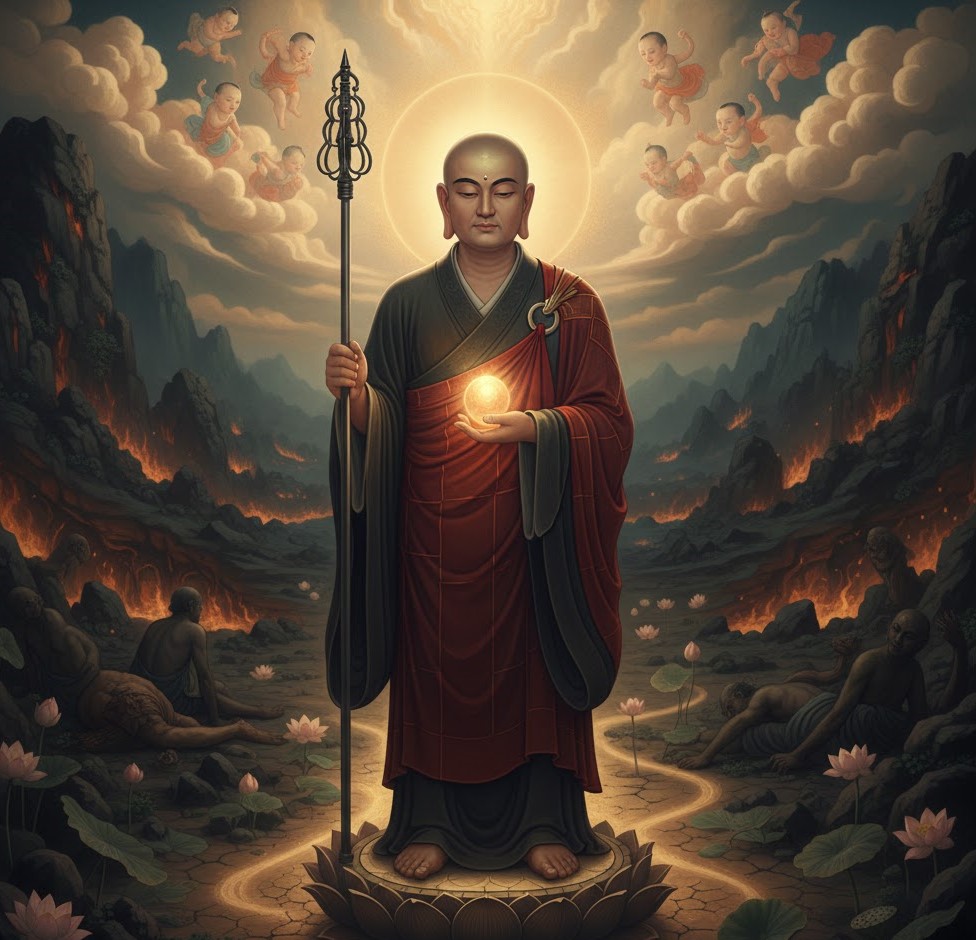
Among the vast pantheon of Mahayana Buddhist figures, Ksitigarbha Bodhisattva (Dizang Pu Sa in Chinese, Bosatsu in Japanese) stands as a unique and profoundly compassionate figure, often depicted as a monk holding a staff and a wish-fulfilling jewel. He is revered as the protector of beings in the lower realms, particularly those suffering in the hells ($naraka) and the hungry ghost realm (preta), and as the guardian of children and the deceased. His story and vows exemplify an unparalleled commitment to alleviating suffering, embodying an ultimate form of altruism that promises to empty the hells before attaining Buddhahood himself. This extraordinary vow has cemented his place as one of the most beloved and significant Bodhisattvas, particularly in East Asian Buddhism.
Ksitigarbha’s name, meaning "Earth Store" or "Earth Womb," is deeply symbolic. "Earth" refers to his ability to store and produce boundless treasures for all beings, akin to the earth's nurturing qualities that support all life and yield precious resources. These "treasures" are not merely material, but also spiritual merits, wisdom, and the means to liberation. "Womb" implies his capacity to conceal and protect these virtues, much like a womb protects and nurtures a developing life. He is seen as the foundation of all good qualities, diligently working beneath the surface of existence to sustain and liberate countless sentient beings, especially those trapped in the deepest abysses of suffering. His image, often simple and monastic, belies the immense power and unwavering resolve he possesses to penetrate the darkest corners of existence.
The central pillar of Ksitigarbha's significance lies in his great vow. According to the Ksitigarbha Bodhisattva Purvapranidhana Sutra (The Sutra of the Past Vows of Earth Store Bodhisattva), he made several profound vows in his past lives. One of the most famous and awe-inspiring is his declaration: "If I do not go to the hells to help the suffering beings there, who else will go? ... Only when all beings are saved, will I accomplish Buddhahood. If the hells are not empty, I will not become a Buddha." This vow is astounding in its selflessness, signifying a readiness to postpone his own ultimate liberation until every single being entangled in the most severe suffering has been guided to safety. It is a vow that challenges the very notion of personal enlightenment, prioritizing universal salvation above all else, making him a symbol of ultimate compassion and perseverance.
Ksitigarbha's role extends particularly to the deceased. In many Buddhist traditions, it is believed that after death, beings undergo a transitional period (bardo) and face judgment for their past actions (karma). During this crucial time, Ksitigarbha is invoked to guide and protect the consciousness of the deceased, helping them navigate the challenges of the intermediate state and ideally ensuring a more favorable rebirth. His image is often found in temples and cemeteries, and his sūtra is frequently recited during funeral rites and memorial services. Families pray to Ksitigarbha, offering merits on behalf of their departed loved ones, believing that his compassionate intervention can alleviate suffering in the lower realms and facilitate a better rebirth, even for those who accumulated significant negative karma during their lives.
Beyond the deceased, Ksitigarbha is also specifically revered as the guardian of children, particularly those who have died prematurely (such as miscarried, aborted, or stillborn babies). In Japan, he is widely known as Jizō Bosatsu, and countless stone statues of Jizō, often adorned with red bibs and caps, dot the landscape, especially near temples and along roadsides. These offerings are made by grieving parents, particularly mothers, seeking Ksitigarbha's protection for their lost children in the afterlife. It is believed that he acts as a ferryman of souls, guiding these young, vulnerable spirits through the difficult passages of the afterlife, and even enduring suffering on their behalf. This aspect of his practice highlights his tender and protective nature, extending his boundless compassion to the most innocent and defenseless.
The practice associated with Ksitigarbha involves recitation of his name and mantra, reading his sūtra, and making offerings. Engaging in these practices is believed to generate immense merit, which can then be dedicated to the benefit of suffering beings, both living and deceased. Practitioners seek his blessings for protection from natural disasters, alleviation of poverty, healing from illness, and the removal of obstacles to their spiritual progress. His staff, with its six rings, symbolizes his ability to shake open the doors of the six realms of existence (samsara), signifying his active engagement in liberating beings from all forms of suffering. The wish-fulfilling jewel (cintamani) in his other hand represents the bestowal of blessings, wishes, and enlightenment itself, a beacon of hope in the darkest of realms.
In essence, Ksitigarbha Bodhisattva represents the unwavering resolve of compassion in the face of overwhelming suffering. He embodies the Buddhist principle that no being is beyond redemption, and that even in the lowest hells, the potential for enlightenment remains. His tireless efforts and self-sacrificing vow serve as an inspiration and a testament to the boundless nature of altruism. He reminds us that the path to liberation is not solely about personal escape from suffering, but about extending a helping hand, with unwavering commitment, to all beings, especially those most forgotten and tormented. Ksitigarbha is the ultimate rescuer, ceaselessly traversing the realms of suffering until every last being finds peace.
Sera Jey Wisdom Center
A Gelug Tibetan Buddhist center in Jakarta. Join our weekly prayers every Saturday at 2 PM — everyone is welcome.
Address
Sera Jey Wisdom Center
Ruko Savoy Blok C1 No.31 & 32,
River Garden Jakarta Garden City,
Cakung Timur, Jakarta Timur 13910,
Indonesia
© 2026 Sera Jey Wisdom Center Jakarta. All rights reserved.